
Blog
PCR: A Fast and Accurate Detection Technology in Modern Healthcare
October 19, 2026 by Calvin Egy Pradana
Share
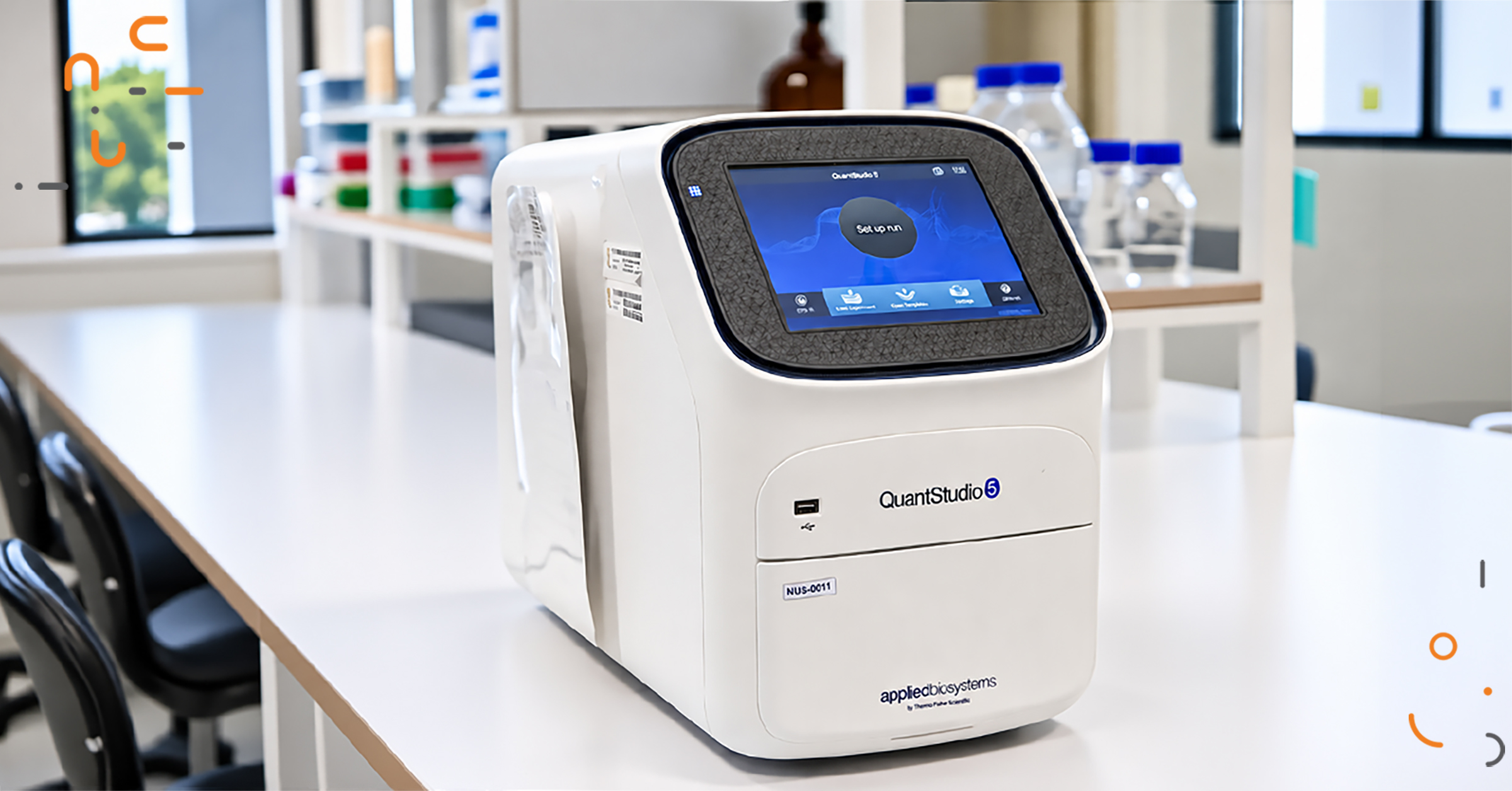
Every organism, including disease-causing viruses and bacteria, carries genetic material in the form of DNA or RNA. This genetic material holds information that can be used to identify an organism, including pathogens present in a biological sample.
In molecular diagnostics, Polymerase Chain Reaction (PCR) is one of the most widely used technologies for detecting genetic material. PCR works by recognizing and amplifying specific regions of DNA or RNA, making it possible to detect the presence of a genetic target in a sample. The technology also offers high sensitivity and specificity, helping laboratories detect pathogen genetic material quickly and precisely.
In clinical settings, PCR is widely used to detect a range of pathogens, including viruses such as SARS-CoV-2, Human Papillomavirus (HPV), Influenza, and many others.
How Does PCR Recognize Genetic Targets?
Imagine a clinical sample, such as a cervical swab, as a container holding many kinds of genetic material: human (host) DNA, bacterial DNA, and the pathogen DNA that is the target of the test. To identify the target gene specifically among all this genetic material, PCR relies on key molecules called primers.
When PCR identifies and amplifies a specific target DNA in a sample, primers act as “markers” that recognize and bind specifically to the target gene’s DNA region. If the target DNA is present in the sample, the amplification process multiplies that region, making it easier to detect.
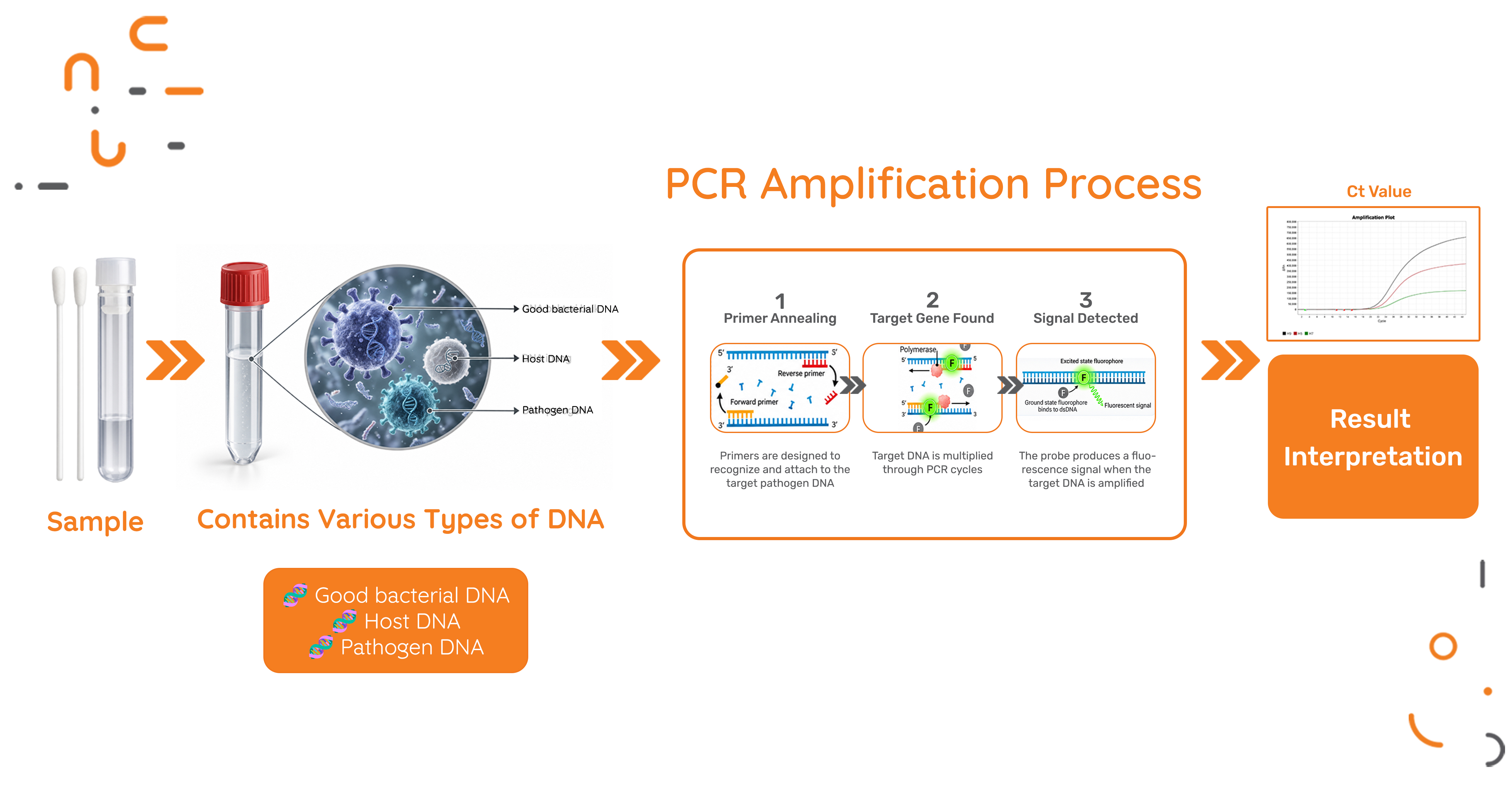
Key Stages of PCR Analysis in the Laboratory
So, how does PCR analysis work in the laboratory? In general, detecting a genetic target starts with collecting a biological sample, and the DNA material obtained from sample processing is then analyzed through amplification in a PCR machine.
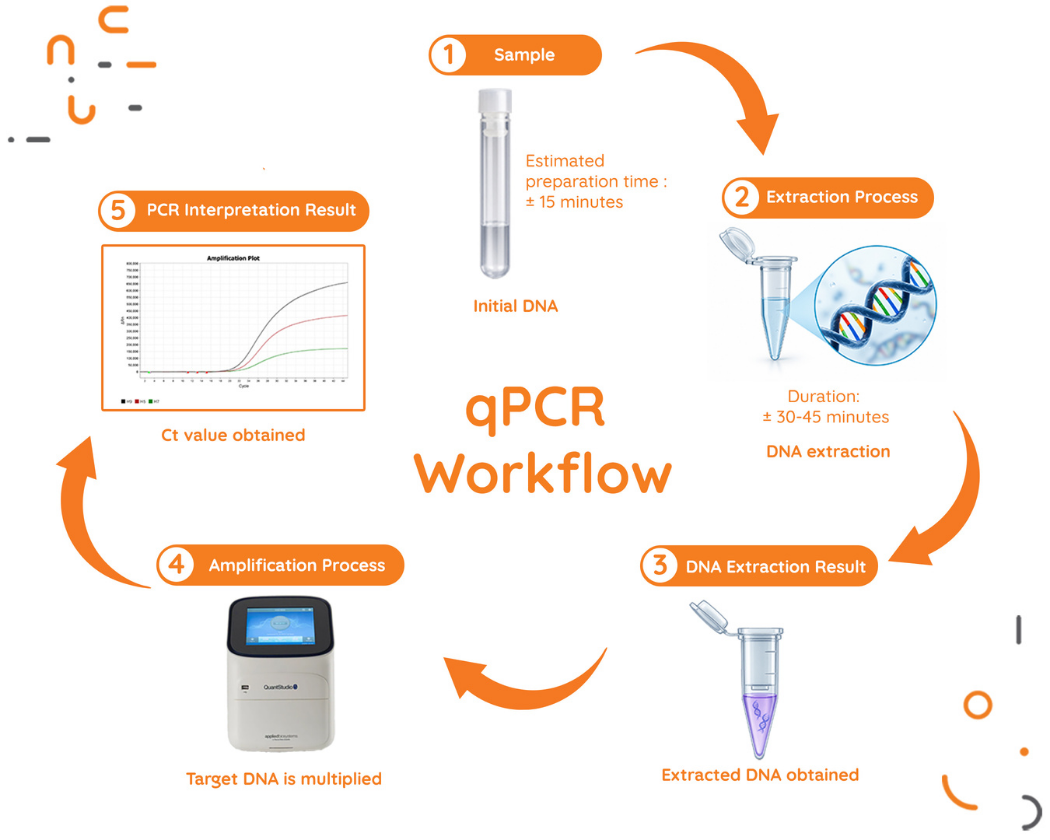
Within this workflow, two main stages play a critical role in the test: DNA extraction and PCR amplification.
1. Extraction Stage (DNA/RNA Separation and Purification)
This stage serves as the “main gateway” before amplification. Here, cells are lysed (broken open) and nucleic acids (DNA/RNA) are separated from other cellular components such as proteins, lipids, and potential inhibitors. This phase is crucial. If the quality (purity) or quantity of the extracted DNA/RNA does not meet laboratory standards, amplification can be hindered, which may ultimately lead to test failure or a false negative result.
2. Amplification Stage
Once purified nucleic acids have been obtained from the extraction stage, the material is mixed with Master Mix reagent and loaded into a Thermal Cycler (PCR machine). If pathogen genetic material is present in the sample and the extraction was optimal, the machine will multiply that DNA so the result can be read and analyzed.
Conclusion
The quality of the final PCR result depends heavily on precision at every stage of testing, from extraction through amplification to detection of the genetic target. The extraction stage in particular deserves close attention, because the quality and purity of the DNA/RNA can affect both amplification and the test result. With the right analytical techniques and good Quality Control, laboratories can produce molecular data that is accurate, valid, and reliable. Ultimately, high-quality PCR results can serve as an important basis for supporting diagnosis and clinical decision-making.
References
[1] Rumsby, G. (2006). An introduction to PCR techniques. Methods in Molecular Biology, 324, 75–89. https://doi.org/10.1385/1-59259-986-9:75
[2] Gupta, N. (2019). DNA Extraction and Polymerase Chain Reaction. Journal of Cytology, 36(2), 116–117. https://doi.org/10.4103/JOC.JOC_110_18
[3] Bustin, S. A., & Huggett, J. F. (2017). qPCR primer design revisited. Biomolecular Detection and Quantification, 14, 19–28. https://doi.org/10.1016/j.bdq.2017.11.001
[4] Thatcher, S. A. (2015). DNA/RNA preparation for molecular detection. Clinical Chemistry, 61(1), 89–99. https://doi.org/10.1373/clinchem.2014.221374
[5] Sidstedt, M., Rådström, P., & Hedman, J. (2020). PCR inhibition in qPCR, dPCR and MPS—mechanisms and solutions. Analytical and Bioanalytical Chemistry, 412(9), 2009–2023. https://doi.org/10.1007/s00216-020-02490-2
Fresh Articles


Menu
Find Us
Mon - Fri: 9 a.m. - 6 p.m.
i3L Campus @ Lvl. 3
Jl. Pulomas Barat No.Kav.88, RT.4/RW.9, Kayu Putih, Pulo Gadung,
Jakarta Timur 13210
Contact Us
hello@nusantics.com
+62 (21) 509 194 30
Copyright © 2026 PT Riset Nusantara Genetika, PT Nusantara Butuh Diagnostik. All Rights Reserved.Privacy Policy
Copyright © 2026 PT Riset Nusantara Genetika, PT Nusantara Butuh Diagnostik. All Rights Reserved.
Privacy Policy